
Precious Metals Value Comparison
Compare premiums, fine-metal content, purchasable whole units and cash remaining using products of the same metal.
Open the premium calculatorAllegiance Gold · Questions worth asking
Clear answers about buying gold and silver, comparing costs, holding qualifying metals in an IRA, and understanding the risks before you decide.
General education · Primary-source references · Sources checked October 3, 2026
01 · Direct ownership
Compare products, delivery and the real cost of owning physical metals.
Explore buying questions →02 · Retirement accounts
Learn about eligibility, rollovers, independent custody and account fees.
Explore IRA questions →03 · Price transparency
Understand spot, premiums and spreads before evaluating a quote.
Explore pricing questions →Search all questions and answers. Your search stays in this browser and is not sent to us.
Try a shorter phrase or clear the search to browse every topic. For an order-specific question, call 844-790-9191.
Ownership, buying choices and the questions to ask first.
It means purchasing actual coins, rounds or bars rather than shares of a mining company, futures contract, ETF or other financial instrument. With a direct purchase, the customer owns the physical product subject to the transaction terms. With an IRA purchase, qualifying metals are owned by the IRA and held under applicable IRA custody rules.
Yes. A self-directed IRA is not required to own physical precious metals. Direct purchases and IRA purchases have different custody, tax, payment and delivery considerations. Browse physical metals.
Browse the Shop Metals catalog for current products, prices and availability. Where online checkout is available, select your products and quantities and review the final total before submitting your order. For assistance or an IRA purchase, call 844-790-9191. Confirm the product, payment method, delivery or custody arrangement, and applicable terms before authorizing a transaction.
Compare the exact product, fine-metal content, total purchase price, current spot reference, effective premium, current dealer repurchase indication when available, payment-related pricing, shipping/storage costs and applicable taxes. For an IRA, also compare custodian, administration, transaction, storage, distribution and termination fees.
No. Gold has been used as a store of value over long periods, but its price can decline and it can underperform other assets for extended periods. No dealer can guarantee that gold will preserve a particular amount of purchasing power or produce a profit.
No. Gold is often considered as a potential inflation or currency-risk diversifier, but the relationship is not consistent in every period.
Allegiance Gold does not determine an appropriate allocation for you. Concentration in any single asset class can create risk. Consider liquidity needs, time horizon, risk tolerance, existing holdings, taxes and total transaction costs with your own qualified advisers.
Physical ownership involves specific coins or bars, delivery or storage, insurance and dealer buy/sell costs. An ETF involves shares governed by a fund’s prospectus, expenses, brokerage and trading rules; owning shares does not necessarily entitle a retail shareholder to delivery of a coin or bar. Compare the actual legal ownership and costs, not just the word “gold.”
The current online terms allow guest purchases. Account registration is optional where guest checkout is offered. Keep your confirmation and order number so you can request order assistance without assuming that saving a product or submitting a contact form creates an order.
No. The heart saves a product in the browser on that device; it does not reserve inventory or lock a price. Click it again to remove the product, and use Saved products to reopen your list. Visit the product page to check its current price and availability.
Understand product specifications and compare equivalent metal content.
Coins, rounds or bars valued primarily for metal content rather than rarity. Bullion can still carry different premiums based on mint, form, size, demand and availability.
The standard precious-metals weight unit. One troy ounce is approximately 31.1035 grams.
The proportion of precious metal in an item. For example, .9999 gold is 99.99% pure gold.
A bullion coin is generally issued by a government mint and has a legal-tender denomination. A round is usually privately minted and has no legal-tender denomination. Bars are manufactured by government or private mints and refiners. All three can carry premiums; compare metal content and resale demand rather than the shape alone.
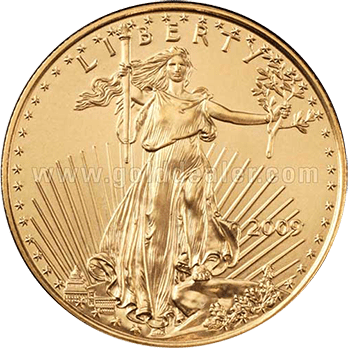
An official U.S. bullion coin produced by the U.S. Mint. The one-ounce Gold Eagle contains one troy ounce of fine gold but uses a 22-karat alloy, so gross weight is greater than one troy ounce. Certain American Eagle coins receive specific treatment under IRC §408(m) for IRA purposes.
A sovereign bullion coin produced by the Royal Canadian Mint. Standard one-ounce bullion issues are known for high purity. IRA eligibility depends on the exact product satisfying applicable requirements and custodian acceptance.
They differ in mint, alloy/purity, design, dimensions, security features by issue, market premium and current buy/sell economics. A one-ounce Gold Eagle contains one troy ounce of fine gold despite .9167 fineness; a standard one-ounce Maple Leaf is typically .9999 fine. Compare the exact issue, live retail price and current repurchase indication.
A specially manufactured coin produced for a distinctive finish/presentation. Proof status alone does not determine IRA eligibility or future value.
A coin authenticated and graded by a third-party grading service. Certification does not guarantee appreciation or liquidity.
The exact year supplied may vary with inventory. The product page should state which specifications remain constant and which characteristics may vary.
A fractional coin costs less per unit than a larger coin at comparable prices, but its premium per fine-metal ounce may be higher. Smaller units may make partial sales easier. Compare cost per fine-metal ounce, total purchase cost and current resale demand; a lower ticket price does not automatically mean better value.
Compare fine-metal content separately from gross weight. A standard one-ounce American Gold Eagle contains one troy ounce of gold plus alloy metals; a standard one-ounce .9999 Gold Maple Leaf also contains one troy ounce of gold. Different purity does not mean the Eagle’s stated ounce contains less gold.
Use an established seller, retain invoices and product identifiers, and compare specifications with the issuing mint or refiner. Packaging and visual appearance alone do not prove authenticity. If you have doubts, obtain testing by a qualified professional using methods suitable for the product; avoid destructive testing without understanding its effect on value.
Avoid cleaning, polishing or removing protective packaging without professional guidance. Handling and cleaning can change surfaces, condition and collector value. Use appropriate storage and ask about the exact product’s care requirements, especially for proof or certified coins.
They have different industrial demand, market size, price behavior and product availability from gold and silver. Premiums and resale liquidity can vary. Some products may qualify for an IRA when requirements are met, but eligibility does not establish suitability or eliminate price risk.
Practical answers before and after an online order.
Use the methods actually offered at checkout for your order. Availability, limits, verification and processing holds may differ by method and transaction. Do not assume that every payment method mentioned in older terms or educational content is currently enabled. Ask for confirmation before sending funds.
The current online terms treat a submitted order as a binding transaction and describe price confirmation subject to payment deadlines and other conditions. Adding an item to the cart, viewing a ticker or saving a product does not lock a price. Keep the order confirmation and review the Online Store Terms.
The current online terms require a bank wire to be received within 3 business days. A check must be postmarked within 1 business day and full payment received within 10 calendar days of the order date. Receipt of a check is different from funds clearing. Missing a deadline can trigger cancellation or market-loss charges under the applicable agreement.
Follow your order confirmation. The published check mailing address is Allegiance Gold, 27001 Agoura Road, Suite 200, Calabasas, CA 91301. Include your order number and confirm payee and accepted check type with the team before mailing. Do not send funds to a new address based solely on an unsolicited message.
Use the instructions supplied for your specific order. Independently call 844-790-9191 using the number on the official website before sending funds, especially if someone requests changed bank details. Do not rely solely on a reply email or an inbound call to verify a payment change.
An on-hold status can mean payment or another verification step is pending. An order confirmation acknowledges the order; it does not establish payment clearance or shipment. Contact the team with your order number if you need the reason for a particular hold. Do not place a duplicate order simply because payment is still being processed.
Do not assume a confirmed precious-metals order can be freely canceled or repriced. Allegiance’s online terms describe binding orders and potential market-loss charges; changes may be unavailable after processing or shipment. Contact the team promptly before taking action and review the cancellation and market-loss provisions of your agreement.
The current online terms provide a limited return/exchange process with notice within 5 business days of receipt, subject to conditions and market-loss rules. Shipping charges are not refundable, and return shipping and insurance can be your responsibility. This is not an unconditional refund promise. Review the return section of the Online Store Terms and contact the team before sending anything back.
An online order generates an order confirmation containing its number and details. Keep it for your records and use the invoice access provided with the order when available. If you cannot find the email, check your spam folder and contact the team using your order number. A confirmation or invoice does not by itself prove shipment or cleared payment.
Do not pay for a personal delivery order and assume it is an IRA transaction. IRA purchases must follow the independent custodian’s funding, purchasing and custody process. Speak with Allegiance Gold and the custodian before ordering with retirement funds or selecting a delivery address.
Delivery, coverage, reporting problems and storage arrangements.
Eligible direct-purchase transactions can be shipped under Allegiance Gold's current written shipping terms. Review the applicable agreement for insurance, delivery, signature, claim, address and risk-of-loss conditions.
Allegiance’s current online terms provide transit insurance subject to the shipping conditions and exclusions. Coverage is not a guarantee against every loss, and responsibility can end at recorded delivery. Review Section 12 of the Online Store Terms before selecting a delivery address, authorizing delivery changes or relying on coverage.
Confirm the packaging and carrier arrangement for your order with Allegiance Gold before shipment. Do not assume that an FAQ description guarantees how a particular package will be labeled or handled.
Under the current online terms, bank-wire and check purchases are estimated to ship 7–10 days after funds clear. If card payments are offered, the estimate is 10–15 days after purchase. These are shipment estimates, not guaranteed delivery dates; carrier transit follows shipment. Payment verification, inventory and other delays can affect timing. Read the order confirmation and current shipping terms.
Depending on the product and arrangement, third-party storage may be available. Confirm ownership, access, insurance, segregation, fees and withdrawal terms in writing.
Generally, assets are separately stored or specifically identified under the provider's arrangement. Definitions vary. Ask exactly how assets are identified, allocated, insured, audited and released.
The current online terms require a signature for packages over $1,000. Review the carrier and delivery instructions for your order, arrange to be available, and do not authorize signature waivers, redirection or unattended delivery without understanding the coverage consequences. Terms and exceptions control.
Contact Allegiance Gold immediately with your order number and tracking details. Preserve packaging and take photographs if contents are damaged, incorrect or missing. Current terms require missing/damaged-content notice within 48 hours of the delivery timestamp and other delivery issues within 2 calendar days; lost-in-transit rules have separate carrier-specific deadlines. Review Section 12 promptly—do not wait for a return window or assume insurance is unconditional.
Ask the team before changing delivery details. Address changes can require verification and may not be possible once processing or shipment has begun. Carrier forwarding, redirection, alternative recipients and unattended delivery can affect responsibility and insurance under the shipping terms.
Directly owned metals outside an IRA have different rules from IRA assets, but home storage still creates security, access and insurance risks. Check the coverage and exclusions of your own policy; a safe or a bank box does not automatically insure its contents. Avoid disclosing valuable holdings unnecessarily.
Providers use these terms differently. Allocated arrangements identify metal owned for a customer; segregated arrangements generally separate or specifically identify holdings; commingled arrangements can place compatible holdings together. Ask whether you receive the same items or equivalent products, how ownership is recorded, and what happens on withdrawal or provider failure.
Understand the exit before deciding what to buy.
Physical precious metals have resale markets, but no future buyer, sale price, timing or liquidity level is guaranteed.
No future repurchase is guaranteed. You may ask Allegiance Gold to consider buying your metals; whether an offer is made, its price and its conditions depend on the company’s then-current policy and market conditions. Obtain a written quote rather than treating a website estimate as a commitment.
A dealer’s offer can depend on metal prices, the exact product and condition, customer demand, inventory and current wholesale markets. Ask for a written offer and its conditions. Neither melt value nor the original purchase premium sets a guaranteed resale price.
Not necessarily. A dealer's bid for a specific product can be above, at or below a spot reference.
Owners of directly held metals may generally seek offers from other buyers, subject to law and transaction terms. IRA-owned metals must be sold through the IRA's permitted custody process.
An immediate resale can result in a loss because retail purchase and repurchase prices differ. Ask about the current spread before buying.
Contact 844-790-9191 with the exact product, quantity, condition, packaging and ownership or custody details. Ask whether Allegiance Gold is making an offer, how long it remains valid, and what verification, shipping, deductions and payment timing apply. IRA-owned metals require coordination with the custodian before movement or sale.
General U.S. tax and reporting concepts—not personalized tax advice.
For directly held investment metals outside an IRA, a sale can produce a taxable capital gain. Long-term gains on many precious-metal coins and bullion fall under collectibles rules with a maximum 28% federal capital-gains rate, not an automatic flat 28% tax. Short-term treatment, other taxes and state rules can differ. IRA transactions and distributions follow separate rules. Ask a tax professional about your circumstances.
Treatment depends on whether the property was held for investment or personal use and on individual circumstances. Consult a qualified tax professional.
Not every purchase follows the same reporting rule. Form 8300 generally applies when a business receives more than $10,000 in cash as legally defined, in one transaction or related transactions. It is not a blanket rule that every purchase above $10,000 is reported on that form. Other legal requirements can apply. Never split or structure transactions to avoid reporting.
Cash includes currency and, in specified circumstances, certain monetary instruments such as cashier’s checks, money orders or bank drafts. A personal check drawn on the payer’s own account is not cash for Form 8300. The definition and aggregation rules are technical; review the IRS reference guide or ask a qualified tax professional.
Some sales to a dealer or broker can require Form 1099-B reporting; others fall within the IRS precious-metals exceptions. The result depends on the product, form and quantity, with aggregation and anti-avoidance rules. A missing information form does not make a taxable gain tax-free. Keep your own purchase and sale records and ask a tax professional.
State/local rules vary by jurisdiction, product, amount, delivery location and other factors. Applicable tax should be determined under current law at transaction time.
Retain invoices, purchase and sale dates, product descriptions, quantities, fees, payment records and any distribution or reporting forms. Cost basis and tax treatment depend on the transaction; do not substitute an old spot quote for the actual purchase record. Your tax professional can identify the records needed for your situation.
Generally, an IRA’s internal sale is different from a taxable personal sale. Distributions, Roth qualification, prohibited transactions and other IRA rules can still affect taxes and penalties. Avoid applying the personal collectibles capital-gains rate to an IRA distribution without professional advice.
Qualifying products, independent custody and ownership rules.
"Gold IRA" is a common term for a self-directed IRA that can hold qualifying physical precious metals under applicable tax and custody rules. It is not a separate federal tax category created solely for gold. Learn about Gold IRAs.
The IRS does not endorse individual dealers or investments. Federal tax law permits certain coins and qualifying bullion in IRAs when statutory requirements are met. Relevant rules include IRC §408(m).
No. Allegiance Gold is the metals dealer. A separate qualified custodian/trustee administers the IRA.
Federal law generally excludes collectibles but provides exceptions for certain coins and certain gold, silver, platinum and palladium bullion meeting statutory requirements. Custodians can impose additional restrictions.
Common custodian guidelines cite minimum fineness of .995 for gold, .999 for silver, and .9995 for platinum and palladium, with specific statutory coin exceptions. Purity alone does not establish eligibility: the exact product, applicable legal requirements, custody and custodian acceptance must also be checked. Get written confirmation for the proposed product before purchasing it for an IRA.
Certain American Eagle coins are specifically covered by the statutory coin exception in IRC §408(m).
Many standard Maple Leaf bullion coins meet the applicable fineness requirement, but confirm the exact issue and custodian policy.
A standard Gold Krugerrand is below the general .995 fineness threshold and does not receive the American Eagle statutory exception. Confirm any proposed product with the custodian.
Many collectibles are not. Specific statutory exceptions exist. Do not rely on an "IRA approved" label without verifying the exact product and custodian policy.
Do not treat personally stored bullion as compliant IRA custody. The IRS says the qualifying-bullion exception requires physical possession by a bank or approved nonbank trustee, including when an IRA-owned LLC buys the bullion. Personal possession or other arrangements can create distribution or prohibited-transaction consequences. Obtain independent legal and tax advice before considering a home-storage IRA structure.
Depositories provide specialized custody, security and inventory controls under applicable arrangements. IRA ownership does not mean the account owner can take personal possession while the assets remain in the IRA.
Physical gold and silver do not pay interest or dividends. Results depend on asset value relative to purchase, holding and selling costs.
Ordinary IRA contributions generally must be made in money; do not transfer personally owned coins into the account and label them a new contribution. An in-kind transfer of existing IRA assets has different rules and custodian requirements. Selling personal holdings to your own IRA can also create prohibited-transaction issues. Obtain custodian and tax advice first.
A self-directed Roth IRA may hold qualifying metals if the custodian permits them and legal and custody requirements are met. Roth contribution eligibility, conversion taxes and qualified-distribution rules still apply. The metal does not make every withdrawal tax-free.
It generally involves improper use of IRA assets by the owner or other disqualified persons, such as personal use, certain self-dealing purchases or prohibited borrowing. Consequences can be severe and may affect the entire account. Have the custodian and independent advisers evaluate a proposed transaction before using IRA assets.
Different ways to fund an account have different rules.
A trustee-to-trustee transfer may move assets directly between IRA custodians without distribution to you, subject to account/custodian requirements.
Some eligible employer-plan distributions can be rolled to an IRA. Eligibility depends on the plan and circumstances. Confirm with the plan administrator.
Not universally. Distribution eligibility from a current employer plan depends on plan rules and law; former-employer balances may have different options.
A direct movement from one IRA trustee/custodian to another. The IRS states this is not a rollover and is not subject to the IRA one-rollover-per-year limitation.
An eligible employer-plan distribution paid directly to another eligible plan or IRA. Mandatory 20% withholding generally does not apply to a qualifying direct rollover.
If an eligible distribution is paid to you, you generally have 60 days to deposit the eligible amount into another qualifying plan/IRA. Withholding and other rules can apply.
Yes, generally for IRA-to-IRA 60-day rollovers across an individual's IRAs. It does not apply to trustee-to-trustee transfers, conversions, plan-to-IRA, IRA-to-plan or plan-to-plan rollovers.
No blanket guarantee should be made. Eligibility, timing, withholding, Roth treatment, after-tax amounts and transaction structure can change the result.
For tax year 2026, combined annual contributions to traditional and Roth IRAs are generally limited to $7,500, or taxable compensation if lower. The age-50-or-older limit is $8,600, including a $1,100 catch-up. Roth income eligibility and traditional-IRA deduction limits are separate rules. Eligible rollovers do not use up this annual contribution limit.
For 2026, employer SEP-IRA contributions generally cannot exceed the lesser of 25% of eligible compensation or $72,000. Self-employed people use a different calculation, and other eligibility and compensation rules apply. Consult the IRS SEP guidance and your tax adviser; the maximum is not an amount every business owner can contribute.
A partial transfer or rollover may be possible if the account, plan and receiving custodian allow it. Check distribution eligibility, minimums, fees, required distributions and any restrictions. Moving assets is not a reason to assume that all of your savings should be concentrated in metals.
Know who does what and obtain the complete cost in writing.
Typically: IRA owner, independent custodian/trustee, precious-metals dealer and depository. The dealer sells; the custodian administers; the depository stores.
Potential costs include setup, annual administration, transactions, wires, storage, shipping, in-kind distribution, termination and the product premium/spread. Obtain current written schedules.
No. Provider schedules differ. Some are flat, some asset-value based or tiered. Do not assume.
A promotion may not require a separate line-item payment, but evaluate the entire transaction. Compare retail price, premium, current repurchase indication and all account costs. The CFTC advises consumers to understand how the dealer earns its profit.
Normalize the dollar amount, metal, product, weight, quantity, spot time, payment method and storage arrangement. Compare retail price, metal value, effective premium, current repurchase indication, first-year/recurring fees and promotions.
Ask the custodian which valuation method it uses and when values are updated. A statement’s reporting value can differ from the retail price paid, a collectible appraisal or a dealer’s current repurchase bid. Use an actual current quote to assess possible sale proceeds; neither a statement nor an appraisal guarantees what a buyer will pay.
Depositories may maintain insurance under their own policies. Limits, exclusions, deductibles and claim procedures differ. Review the applicable provider's current written coverage; avoid generic promises such as "100% insured against every loss" unless contractually supported.
Cash, physical distributions, beneficiaries and required withdrawals.
Depending on the custodian and account, you may receive cash after metals are sold or an in-kind distribution of the metals. The custodian must process the distribution and determine reporting requirements. A traditional IRA distribution can be taxable; Roth treatment depends on the distribution rules. Confirm taxes, withholding, fees and timing before requesting either method.
The asset itself is distributed rather than sold for cash. The distributed value can be reportable/taxable depending on account and circumstances.
It can. Traditional and Roth IRA distribution rules differ. Ask the custodian and tax professional before directing a distribution.
Required Minimum Distributions are minimum amounts that certain retirement-account owners must withdraw after reaching the applicable statutory age.
The IRS currently states that RMDs generally begin at age 73, while federal law provides age 75 for certain younger birth cohorts. Earlier rules, birth year, account type and beneficiary status can change the result. Confirm your required beginning date with your custodian or tax adviser. The first-year deadline can differ from later annual deadlines.
For many IRA owners, it uses the prior December 31 account balance divided by an applicable IRS life-expectancy factor. Special rules can apply.
Traditional IRA RMDs are generally calculated separately, while aggregation rules may permit the total to be taken from one or more IRAs. Employer-plan rules differ. Confirm before acting.
No. RMD amounts are not eligible rollover distributions. If an RMD is due for the year, coordinate its treatment with the custodian or plan administrator before arranging a rollover. Errors can create excess contributions or other tax consequences.
The original owner of a Roth IRA does not have lifetime RMDs from that Roth IRA. Beneficiaries follow separate inherited-account rules. Do not apply this answer to every retirement plan or inherited IRA without checking its rules.
The custodian follows the beneficiary designation, account agreement and inherited-IRA rules. Deadlines and distribution options depend on the beneficiary and other circumstances; a spouse’s options can differ from a nonspouse’s. Review beneficiaries periodically and obtain independent estate and tax advice.
Questions that help you identify risk and evaluate a seller.
Price volatility, premiums, spreads, changing product demand, storage/account fees, theft/loss outside insured arrangements, liquidity differences, taxes, counterparty risk and opportunity cost.
Yes. No historical pattern or economic narrative guarantees future performance.
That label is too broad. Physical metals do not eliminate market, pricing, custody, liquidity, tax or opportunity-cost risk.
Guaranteed returns; claims metals cannot lose value; extreme urgency/fear; hidden premiums; refusal to provide written pricing; guaranteed buybacks; claims a dealer itself is "IRS approved"; misleading "free metal" promotions; unsupported rarity claims; or advice to evade reporting/custody rules.
Understand spot price, spread, all fees/commissions, salesperson/dealer compensation, what the dealer would pay if you sold immediately, and storage/IRA administration costs.
Verify legal name, physical address, operating history, leadership, written policies, independent reviews, complaint history, pricing disclosures and third-party awards/ratings at their original sources.
A dealer is not automatically your fiduciary merely because it sells precious metals. Allegiance Gold supplies metals; an independent custodian administers an IRA. Product education and sales assistance are different from individualized investment, legal or tax advice. Use your own qualified advisers for allocation and retirement decisions.
Stop sending funds, preserve communications and independently verify the company and payment instructions. Contact your bank promptly if funds have been sent. Use the CFTC’s consumer guidance and complaint resources, and consider the FTC, state regulators or law enforcement as appropriate. A salesperson’s title or celebrity endorsement is not a substitute for verification.
No. FDIC deposit insurance covers eligible deposits at insured banks, not physical precious metals or the contents of a safe deposit box. Private transit, homeowners or depository insurance is different and has its own limits and exclusions. Obtain the actual policy terms instead of assuming that storage at a bank makes the metal federally insured.
Company role, contact details and how to compare your options.
Allegiance Gold, LLC is a precious-metals dealer based in Calabasas, California. Customers can explore physical precious metals for direct ownership or learn about qualifying-metal purchases through a self-directed IRA administered by an independent custodian. Check the current catalog and written transaction terms for the products and services available to you.
Purchasing a government-minted coin does not mean the government endorses the dealer or the investment. The IRS does not endorse an individual dealer’s investment recommendations. IRA eligibility is a question of tax law, the exact product and compliant custody—not a government guarantee of returns.
You can use the Gold & Silver Price Comparison tool to compare a quoted order with available Allegiance Gold products, or request assistance at 844-790-9191. Match the product, fine-metal content, quantity, payment method and quote time. Include tax, shipping and account costs when assessing a final purchase.
Call 844-790-9191 or use the contact page. The published address is 27001 Agoura Road, Suite 200, Calabasas, CA 91301. Published business hours are Monday–Thursday, 7 AM–5 PM, and Friday, 7 AM–4 PM, Pacific time. Confirm holiday schedules and any in-person appointment before visiting.
No. Top Pick is a curated storefront selection, not a personalized investment recommendation. Selling Fast does not establish rarity, future value or a guaranteed deadline. Confirm the actual price, availability and product details; promotional labels do not remove investment or transaction risks.
Put the numbers in context
Use the tools already available on Allegiance Gold. They provide educational comparisons, not a guaranteed transaction or future resale value.
Compare premiums, fine-metal content, purchasable whole units and cash remaining using products of the same metal.
Open the premium calculatorEnter a quoted order and compare equivalent products and quantities with available Allegiance Gold shop pricing.
Compare a quoted orderA shared vocabulary
Your pre-purchase checklist
Ask for these details in writing before buying metals or moving retirement assets.
Tax and retirement answers summarize general U.S. rules. Check the linked primary sources and ask your own qualified advisers about your circumstances. Custodian requirements and written transaction terms matter. An external source link does not imply endorsement of Allegiance Gold.
Explore the current catalog, learn about a precious-metals IRA, or ask our team for written product and transaction details. Take the time you need to compare your options.
Important: Allegiance Gold sells physical precious metals; an independent custodian administers an IRA. This page provides general education, not personalized investment, tax or legal advice. Precious metals can rise or fall in value and do not pay interest or dividends. No future return, liquidity or repurchase is guaranteed. Review the risk disclosure and your applicable transaction terms before purchasing. This FAQ does not amend a signed agreement or expand insurance coverage.

© 2026 Allegiance Gold
Free Metals Terms & Conditions | Terms of Use | Privacy Policy | CA Privacy Notice | Applicant, Employee, and Contractor Privacy Notice
Risk Disclosure | AML Program
 Gold Products
 Silver Products
 Platinum