

Last Updated: This guide is reviewed regularly to ensure accuracy and reflects the latest IRS rules and regulations.
LEARNING CENTER
What Is a Gold IRA?
The Complete 2026 Guide to Precious Metals in Your Retirement
A Gold IRA is a self-directed retirement account that lets you hold physical gold and other IRS-approved precious metals as part of your long-term savings strategy.
Best OverallGold IRA Company – Money
Inc. 5000Multi-Year Honoree
6,000+ ClientsServed
A+ BBB Rating& Trusted Since 2017
No Pressure.Just Answers.
2026 GOLD IRA
INVESTOR GUIDE

Everything you need to know before you invest in a Gold IRA.
Download Free GuideTable of contents
- Key Takeaways
- Gold IRA at a Glance
- How a Gold IRA Works
- Types of Gold IRAs
- vs Traditional IRA
- vs Gold ETF
- Rollover Eligibility
- Transfer vs Rollover
- Step-by-Step Process
- IRS-Eligible Metals
- Custodian Explained
- Depository & Storage
- Fees and Costs
- Taxes & Distributions
- Benefits
- Risks
- Who It's Right For
- Questions for Dealers
- Common Mistakes
- Scams & Red Flags
- Tools
- FAQs
- Glossary
1.
Key Takeaways
- A Gold IRA lets you hold physical gold and other approved metals in a tax-advantaged retirement account.
- It works through a custodian and approved depository — never at home.
- You can roll over or transfer eligible retirement accounts without taxes or penalties.
- Gold IRAs offer diversification, inflation protection potential, and long-term value storage.
- Understand the rules, costs, and risks before you decide.
2.
Gold IRA at a Glance
| Feature | Gold IRA | Traditional IRA | Roth IRA | Brokerage IRA |
|---|---|---|---|---|
| What You Can Hold | Physical gold, silver, platinum, palladium | Stocks, bonds, mutual funds, ETFs | Stocks, bonds, mutual funds, ETFs | Stocks, bonds, mutual funds, ETFs |
| Tax Benefits | Tax-deferred growth | Tax-deferred growth | Tax-free growth | Tax-deferred growth |
| Contributions | Rollover/transfer funds + $7,500 new ($8,600 at 50+) | Annual contribution limits apply | Annual contribution limits apply | Annual contribution limits apply |
| Storage | Must be in an approved depository | Not applicable | Not applicable | Not applicable |
| Liquidity | High (sell metals) | High | High | High |
| Best For | Diversification & inflation hedge | Tax-deferred savers | Tax-free growth | Active investors |
A Gold IRA isn't a separate category under the tax code — it's a self-directed IRA holding metal, in traditional or Roth form. Same wrapper, different assets. The 2026 annual contribution limit across all your IRAs is $7,500, or $8,600 at age 50+.
3.
How a Gold IRA Works
1. Open AccountYou open a self-directed IRA with an approved custodian.
2. Fund Your IRATransfer or rollover eligible retirement funds tax-free.
3. Choose MetalsSelect IRS-approved gold, silver, platinum, or palladium.
4. Secure StorageYour metals are stored in an approved, insured depository.
5. RetirementSell for cash or take distributions in metal or cash.
Start to finish, a funded and allocated account typically takes two to four weeks — most of that is the outgoing custodian's transfer processing. Full mechanics: How Does a Gold IRA Work?
4.
Types of Gold IRAs
Traditional Gold IRA
Funded with pre-tax dollars. Taxes are deferred until withdrawal.
Best for: Lowering taxable income today.
Roth Gold IRA
Funded with after-tax dollars. Qualified withdrawals are tax-free.
Best for: Tax-free income in retirement.
401(k) Rollover Gold IRA
Fund a Gold IRA from a former employer's 401(k), 403(b) or TSP — tax-free as a direct transfer.
Best for: Old workplace plans left behind.
5.
Gold IRA vs. Traditional Assets
| Feature | Gold IRA | Gold ETF | Stocks/Bonds | Cash |
|---|---|---|---|---|
| Tangible Asset | Yes | No | No | No |
| Inflation Hedge Potential | High | Moderate | Variable | Low |
| Counterparty Risk | Low | Moderate | Moderate | Low |
| Volatility | Moderate | High | High | Low |
| Long-Term Value Storage | Strong | Moderate | Variable | Weak |
| Income Produced | None | None | Dividends/interest | Interest |
Versus a conventional traditional IRA, the tax wrapper is identical — same contribution limits, same RMDs, same early-withdrawal rules. What changes is the asset: physical metal held at a depository instead of securities held at a brokerage, with flat custody fees instead of fund expense ratios.
6.
Gold IRA vs. Gold ETF
Both give you gold price exposure inside a tax-advantaged account, and they solve different problems. A gold ETF is the cheaper trade: expense ratios run roughly 0.17%–0.40% per year, it sells in seconds, and there's no dealer premium. What you own, though, is a share of a trust — a financial claim settled through the same system as the rest of your portfolio.
A Gold IRA holds the metal itself, titled to your account, with no issuer between you and the asset. You pay for that directness: premiums over spot when you buy, flat custody and storage fees while you hold, and a spread when you sell. The honest rule of thumb: short-term price exposure → ETF; long-term no-counterparty holding → physical. Deeper comparison: ETF vs. Physical Gold.
7.
What Retirement Accounts Can Be Rolled Over?
- 401(k)
- 457(b)
- SIMPLE IRA
- IRA
- TSP (Thrift Savings Plan)
- Profit Sharing Plan
- 403(b)
- SEP IRA
- Other qualified plans
Rollovers are tax-free when done correctly. We help you every step of the way. Workplace plans (401(k), 403(b), TSP) generally become eligible once you've left that employer or reached the plan's in-service distribution age, usually 59½.
8.
Transfer vs. Rollover
| Direct transfer (recommended) | Indirect rollover | |
|---|---|---|
| Who touches the money | Custodian to custodian — never you | Check is paid to you first |
| Withholding | None | Typically 20% mandatory from a 401(k) |
| Deadline | None | 60 days to redeposit or it's fully taxable, +10% penalty under 59½ |
| Frequency limit | Unlimited | One IRA-to-IRA rollover per 12 months, across all IRAs |
This is why we default every client to a direct trustee-to-trustee transfer.
9.
Step-by-Step Process
- Confirm eligibility. Traditional, Roth, SEP and SIMPLE IRAs almost always qualify; workplace plans qualify after separation or at the in-service age.
- Open the self-directed IRA. We submit the application to an IRS-approved custodian; the account is titled in your name. About 15 minutes.
- Fund it. Direct transfer, rollover, or a new 2026 contribution up to $7,500 ($8,600 at 50+). Outbound custodians take 3 days to 3 weeks.
- Choose metals and lock pricing. You see spot, premium and total — itemized, in writing — before confirming.
- Metal ships insured to the depository. You receive statements listing exactly what your account holds, and can verify holdings with the custodian at any time.
10.
IRS-Eligible Metals
INTERNAL REVENUE CODE § 408(m)(3)
The collectibles ban does not apply to gold, silver, platinum and palladium bullion meeting futures-contract fineness, held by a qualified trustee. Certain U.S. coins — including the American Gold Eagle — are named separately and qualify regardless of fineness.
| Metal | Minimum fineness | Common eligible products |
|---|---|---|
| Gold | .995 | American Gold Eagle (exception at .9167), Gold Buffalo, Canadian Maple Leaf, Austrian Philharmonic, Australian Kangaroo, LBMA bars |
| Silver | .999 | American Silver Eagle, Canadian Silver Maple Leaf, Austrian Silver Philharmonic, approved-refiner bars |
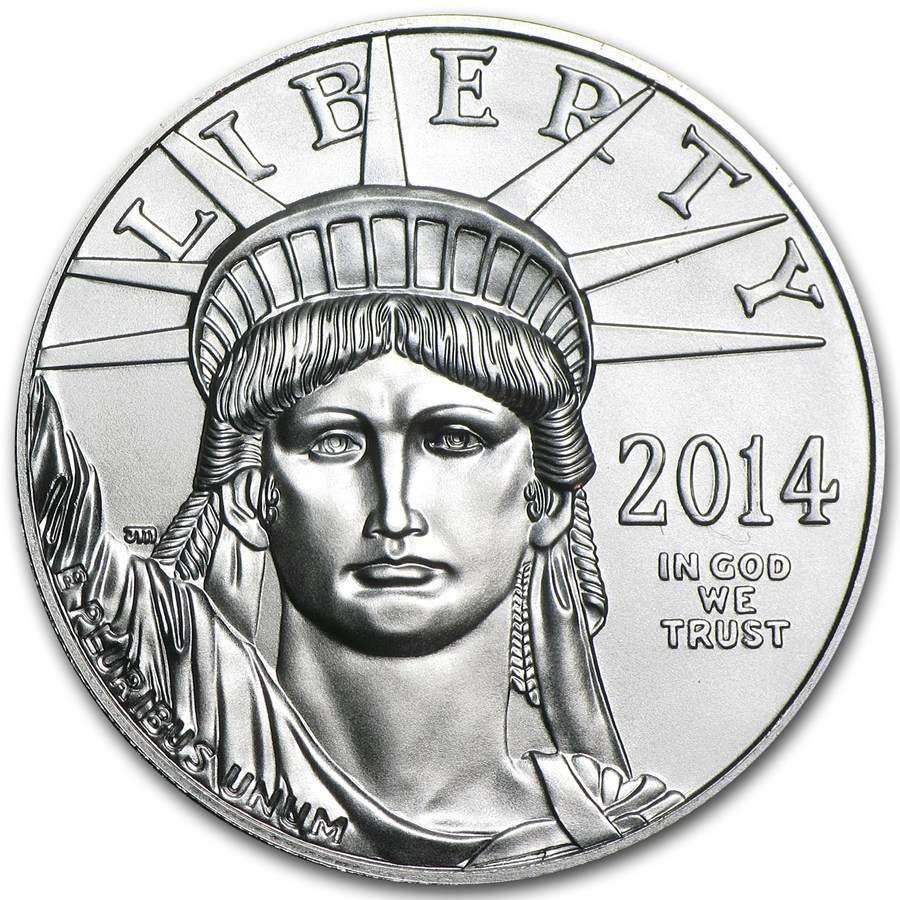
| Platinum | .9995 | American Platinum Eagle, Canadian Platinum Maple Leaf, approved bars |
| Palladium | .9995 | Canadian Palladium Maple Leaf, approved bars |
Not eligible: Krugerrands, British Sovereigns, pre-1965 "junk silver," graded/numismatic rarities, commemoratives, jewelry, non-accredited bars. Full list: purity requirements guide · shop eligible gold.
11.
Custodian Explained
A custodian is the IRS-approved bank or non-bank trustee that administers your self-directed IRA — it holds title on your behalf, executes your instructions, files IRS reporting (Forms 5498 and 1099-R) and issues your statements. It is a separate legal entity from Allegiance Gold: we never take custody of your funds or metal. That separation is your structural protection, and you should confirm it exists at any firm you consider. Non-bank custodians must be specifically approved by the IRS under Treasury Regulation 1.408-2(e).
12.
Depository & Storage
IRA metals must sit in an IRS-approved depository — high-security, audited, all-risk-insured vaults such as Delaware Depository or Brink's Global Services. You choose segregated storage (your exact bars and coins held apart and returned to you) or non-segregated/commingled (identical products pooled; equivalents returned). Both are fully insured; segregated costs more and matters mainly for serial-numbered bars. Holdings appear on your custodian statements, and depositories undergo independent audits.
Home storage is not an option. The Tax Court's McNulty v. Commissioner (2021) decision treated IRA coins stored at home as a taxable distribution of their full value — plus a 10% penalty under 59½. Any firm pitching a "home storage" or "checkbook LLC" Gold IRA is a red flag in itself.
13.
Fees and Costs
| Cost | Typical range | What it's for |
|---|---|---|
| Account setup | $50–$100 one time | Custodian opens and titles the IRA |
| Annual custodian fee | $80–$125 | Recordkeeping, IRS reporting, statements |
| Storage & insurance | $100–$150/yr commingled; more segregated | Depository custody, all-risk insurance |
| Premium over spot | 2%–8% bullion; far higher on proof/numismatic | The largest cost by a wide margin |
| Buy-back spread | Varies by dealer/product | Gap between sale price and spot when you exit |
Compare firms on the all-in price per ounce for the same product. A $50 storage difference is noise; an 8-point premium difference on $100,000 is $8,000 gone on day one. Ranges above are industry-typical — ask any dealer, including us, for the specific schedule in writing.
14.
Taxes & Distributions
- Growth: tax-deferred (traditional) or tax-free on qualified distributions (Roth). The 28% collectibles capital-gains rate on personally-held gold does not apply inside an IRA.
- Distributions: take cash after selling metal, or take the coins in-kind. Traditional distributions are ordinary income; a 10% penalty applies under 59½ unless an exception fits.
- RMDs: begin at 73 (75 if born 1960 or later) for traditional accounts. Metal isn't divisible — plan liquidity a year ahead. Roth accounts have no lifetime RMDs.
- Prohibited transactions (IRC § 4975): no buying metal you already own, no personal use of IRA assets. Penalty: disqualification of the entire account. Details: IRA Withdrawal Rules.
15.
Benefits of a Gold IRA
- Genuinely uncorrelated diversification. Physical gold has no issuer and no counterparty; historically it has moved independently of equities and often inversely in acute stress.
- Currency-debasement hedge. Over multi-decade horizons gold has preserved purchasing power in a way cash and fixed-rate bonds have not — though it's an imperfect hedge over short windows.
- Long-run record. Gold traded near $280/oz in early 2000, first closed above $2,000 in 2020, crossed $4,000 in October 2025 and set an all-time high above $5,500 in January 2026. Past performance isn't a forecast — 2013–2018 sat well below the 2011 peak. Track it live: gold & silver charts.
Diversify and preserve your assets
Most clients allocate a portion — commonly 5%–20% of investable retirement assets — rather than everything, and we don't encourage all-in positions. Whether you're moving a former employer's 401(k) or part of an existing IRA, the mechanics are identical: the custodian moves the funds, you choose the metals, the depository takes custody, and the transfer creates no tax bill when done directly.
16.
Risks & Considerations
WHAT IT DOES WELL
- No-counterparty asset in a portfolio of financial claims
- Tax-free move of existing retirement money (direct transfer)
- Low/negative equity correlation in severe stress, historically
- Same tax deferral or Roth growth as any IRA
- Insured institutional custody at low absolute cost
WHAT IT COSTS YOU
- No dividend or interest — price appreciation is the only return
- Custody and storage fees an index fund doesn't charge
- Premiums and buy-back spreads: a real round-trip cost
- Slower to sell than a brokerage click (1–5 business days)
- Long flat stretches are part of the historical record
- RMDs on traditional accounts need liquidity planning
17.
Who Is It Right For?
A good fit if you: hold a substantial balance concentrated in stocks and bonds; are within ~15 years of drawing income and prioritizing capital protection; have an old 401(k) with a former employer; can hold a non-income asset a decade or more; want a meaningful 5%–20% allocation.
A poor fit if you: have under ~$25,000 to allocate (fixed fees bite); need the money soon or need income from it; haven't captured your full employer match; carry high-interest debt; or want a short-term gold trade — an ETF does that cheaper.
18.
Questions to Ask Any Dealer (Including Us)
- What is the premium over spot on this exact product, in dollars — and will you put it in writing?
- Who is the custodian, and which depository holds the metal? Are they independent of you?
- What is your buy-back policy and typical spread when I sell?
- What are all fees in year two, after any first-year waivers expire?
- Are you recommending bullion or "semi-numismatic" coins — and why?
- What happens to my metal if your company closes?
A firm that answers all six in writing is a firm you can work with. A firm that dodges any of them has answered you anyway.
19.
Common Mistakes
- Using an indirect rollover when a direct transfer was available — triggering withholding and a 60-day clock for no reason.
- Buying high-premium proof coins when standard bullion delivers the same metal exposure for far less.
- Ignoring year-two fees because year one was waived.
- Forgetting RMD liquidity and being forced to sell metal on short notice at whatever the market offers.
- Going all-in. Gold is a diversifier, not a portfolio.
- Buying ineligible coins (Krugerrands, junk silver) and creating an accidental distribution.
20.
Scams & Red Flags
- The numismatic upsell: steering you from bullion into "exclusive" coins carrying 20%–40% markups over melt. Demand the premium in writing.
- Home-storage pitches: illegal in effect since McNulty; it tells you how the firm treats compliance generally.
- Guaranteed returns and fear-based urgency: "gold only goes up," countdown timers, confiscation scares. No legitimate firm guarantees performance.
- "Zero fees for life": the cost usually moved into the premium, where it's harder to see.
- Pressure to liquidate securities immediately: legitimate diversification is never an emergency.
21.
Tools & Calculators
- Gold vs. Stocks Tool — compare gold against the S&P 500 over any period you choose.
- Live Charts — real-time gold, silver, platinum and palladium spot prices.
- White Papers and Research & Publications — deeper reading.
- Video Library — the concepts on this page, explained on camera.
22.
FAQs
Is a Gold IRA a good idea?
As a 5%–20% allocation inside a portfolio otherwise concentrated in stocks and bonds, it adds an asset with no issuer and no counterparty. As a majority of your savings or a short-term trade, it's a poor fit — gold pays no income and round-trip costs are real.
Can I roll over my 401(k) tax-free?
Yes — as a direct trustee-to-trustee transfer, once you're eligible to move the funds (generally after leaving that employer or reaching the plan's in-service age). No withholding, no taxable event, no 60-day clock.
How much do I need to start?
Most reputable firms set minimums between $10,000 and $50,000. Below roughly $25,000, fixed annual fees consume a noticeable percentage of the account each year.
Can I store the metals at home?
No. IRC § 408(m)(3) requires possession by a qualified trustee, and McNulty v. Commissioner (2021) confirmed home possession is a taxable distribution of the full value, plus a 10% penalty under 59½.
What's the 2026 contribution limit?
$7,500, or $8,600 at 50+ (including the $1,100 catch-up), combined across all your IRAs. Rollovers and transfers don't count against it.
Which coins are IRA-approved?
Gold must be .995 fine or better — with the American Gold Eagle permitted at .9167 by statutory exception. Common eligible coins: Gold Eagle, Gold Buffalo, Canadian Maple Leaf, Austrian Philharmonic, Australian Kangaroo, plus LBMA/COMEX bars. Krugerrands and Sovereigns don't qualify.
How are gains taxed?
Tax-deferred in a traditional account, tax-free on qualified Roth distributions. The 28% collectibles rate on personally-held gold doesn't apply inside an IRA.
What if the dealer goes out of business?
Nothing happens to your metal — it's titled to your IRA, held by an independent custodian, stored at a separate depository. The dealer is an intermediary, not a custodian.
Segregated vs. commingled storage?
Segregated returns your exact items and costs more; commingled returns equivalents. Both fully insured. Pay for segregated if you hold serial-numbered bars.
How long does setup take?
Two to four weeks typically — the application takes ~15 minutes; the variable is your current custodian's transfer speed.
Can I keep my regular IRA too?
Yes. There's no limit on the number of IRAs — only on combined annual contributions. Partial rollovers are the most common approach.
23.
Glossary
- Custodian
- IRS-approved bank or trust company administering a self-directed IRA. Independent of the metals dealer.
- Depository
- IRS-approved insured vault (e.g., Delaware Depository, Brink's) that physically holds IRA metals.
- Spot price
- Current market price for immediate delivery, per troy ounce.
- Premium
- Amount above spot paid for a specific coin or bar — mint, distribution and dealer margin.
- Fineness
- Purity as a decimal: .995 = 99.5% pure. The IRS sets minimums per metal.
- Direct transfer
- Custodian-to-custodian funds movement. No withholding, no deadline, unlimited frequency.
- RMD
- Required minimum distribution from traditional IRAs, starting at age 73 (75 if born 1960+).
- Numismatic coin
- Collectible valued for rarity, not metal content. Generally not IRA-eligible; typically steep markups.
Continue Learning
Sources
- IRS, "401(k) limit increases to $24,500 for 2026, IRA limit increases to $7,500," IR-2025-111, Nov. 13, 2025.
- Internal Revenue Code § 408(m)(3); § 4975.
- Taxpayer Relief Act of 1997, Pub. L. 105-34 § 304.
- McNulty v. Commissioner, 157 T.C. No. 10 (2021).
- IRS Publications 590-A and 590-B; SECURE 2.0 Act of 2022.
Allegiance Gold and its employees are not authorized to serve as your personal investment advisor or to provide investment advice about securities or any other regulated financial instrument to you. Precious metals, like all investments, carry risk, are not suitable for all investors, and past performance does not guarantee future results. We do not guarantee any investment performance, future profits or that any precious metal will retain its purchase value. Please consult your own investment, tax, or legal advisor prior to making any investment decision and review the complete Terms of the purchase for any cancellation rights.
*Allegiance Gold is a paid subscriber to Better Business Bureau (BBB), TrustLink, Trust Pilot and Business Consumer Alliance (BCA) and its evaluation or ranking through such service(s) is based on independently verified client experience.
Your Financial Future. Protected by Gold.
Take the next step toward protecting your retirement with a Gold IRA.

 Gold Products
 Silver Products
 Platinum