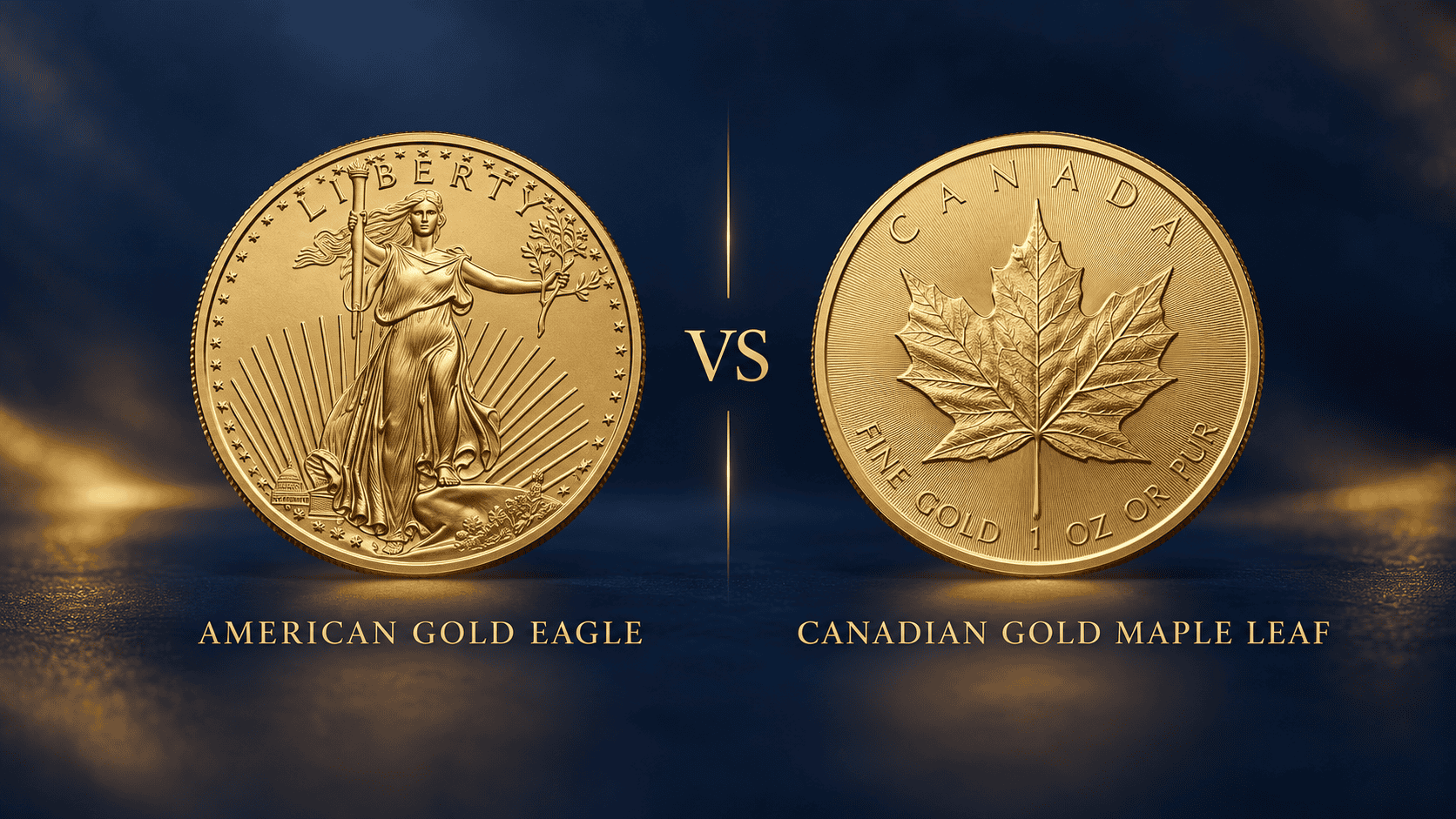
Both the 1 oz American Gold Eagle and the 1 oz Canadian Gold Maple Leaf contain one troy ounce of gold. Their main differences are purity, alloy, dimensions, designs, and the price you pay above the gold value—not the amount of fine gold in the one-ounce version.
If you are comparing these gold bullion coins, begin with the exact product, its current purchase price, and your preferences for mint, appearance, and handling. Neither coin is automatically the better purchase for every buyer.
American Gold Eagle vs. Gold Maple Leaf at a glance
| Specification | 1 oz American Gold Eagle | 1 oz Canadian Gold Maple Leaf |
|---|---|---|
| Issuing mint | United States Mint | Royal Canadian Mint |
| Fine gold content | 1 troy oz | 1 troy oz |
| Gold purity | 22 karat; 91.67% | 99.99% (.9999) |
| Other metals | 3% silver; balance copper | Very small residual content |
| Overall coin weight | 33.931 grams | 31.11 grams, as listed by the Royal Canadian Mint |
| Diameter | 32.70 mm | 30 mm |
| Face value | US $50 | CAD $50 |
| Year and design supplied | Depends on the specific listing and inventory | Depends on the specific listing and inventory |
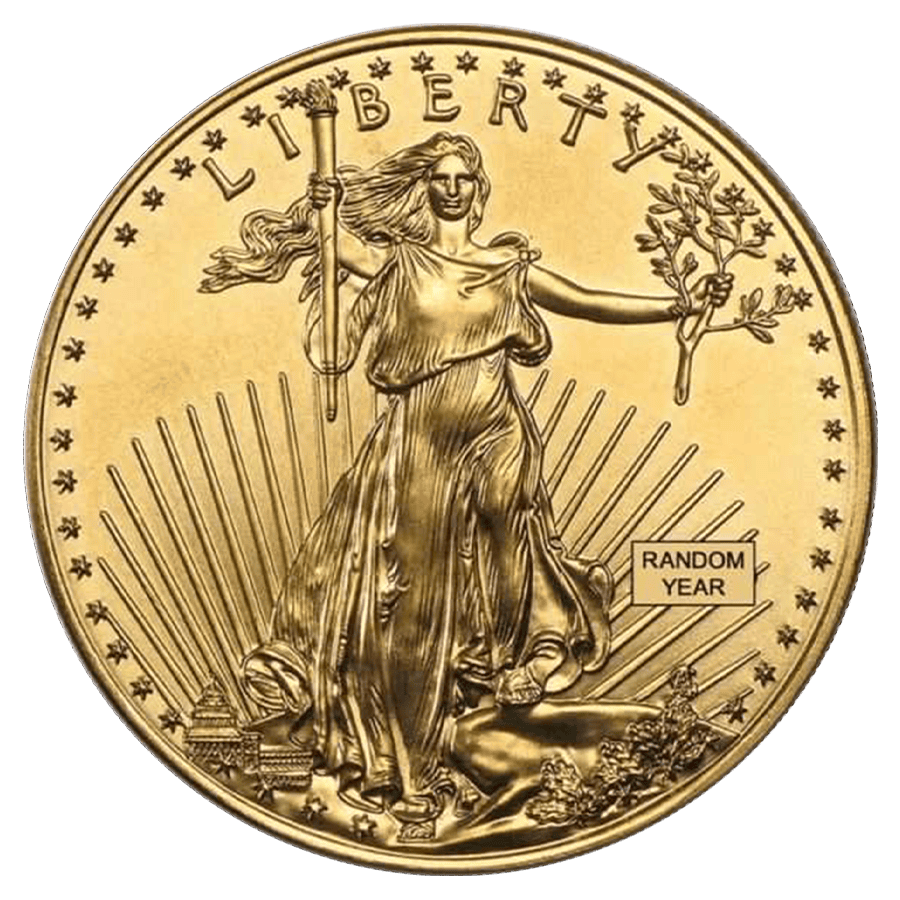
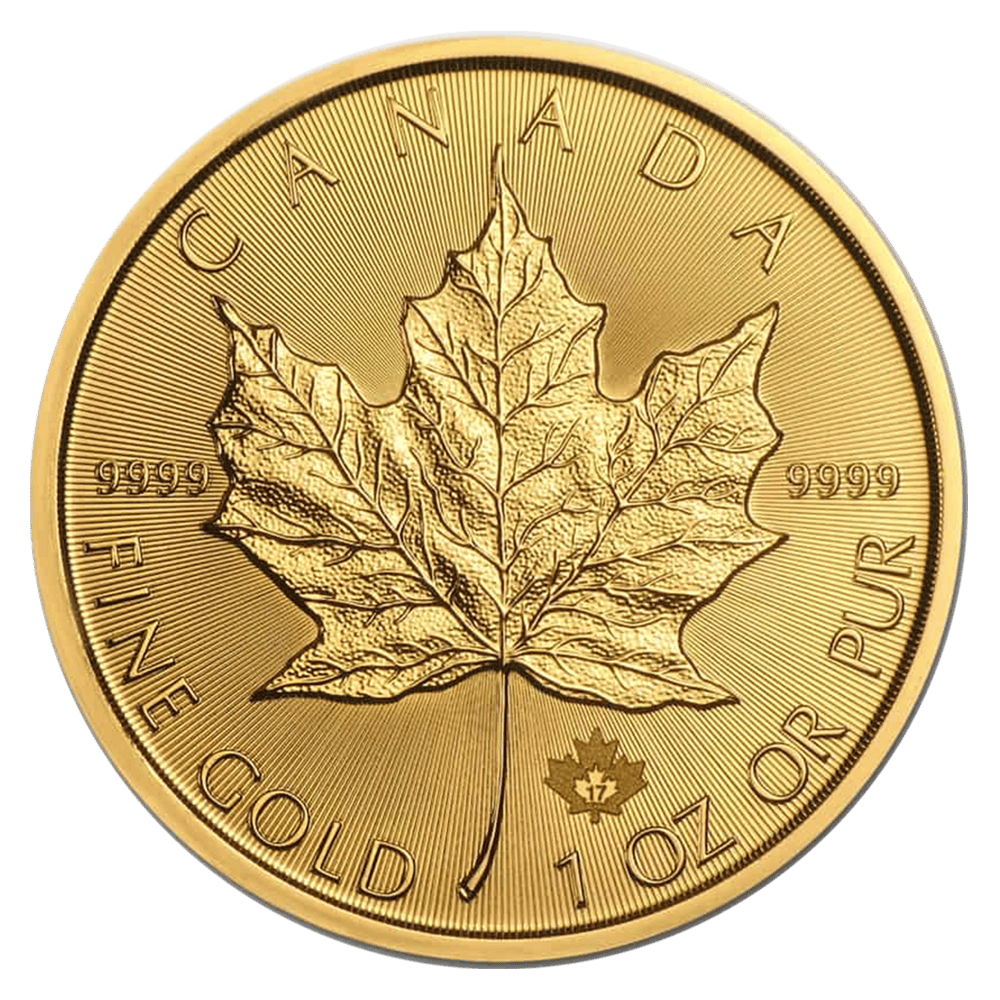
Specifications compare standard one-ounce bullion versions, not proof, graded, or other collector editions. Mint sources are linked below. Images illustrate the coin series; they do not guarantee the date or design supplied.
Does a 22-karat Gold Eagle contain less gold?
No. The one-ounce Gold Eagle contains a full troy ounce of gold. Its silver and copper alloy adds to the coin’s total weight. That explains why its overall weight is higher than the Maple Leaf’s even though their stated fine-gold content is the same.
Purity describes the proportion of gold in a coin. Fine-gold content describes the quantity of gold it contains. Confusing those two measurements can make a comparison misleading.
Purity and durability: what matters when handling the coins?
The U.S. Mint describes the Eagle’s alloy as helping the coin resist scratching and marring. The Maple Leaf appeals to buyers who prefer .9999 fine gold. Higher purity alone does not establish a better resale outcome or a better investment return.
Keep either coin protected, handle it by the edges, and avoid cleaning it. Discuss packaging and storage before ordering if those details matter to you.
Designs and security features vary by year
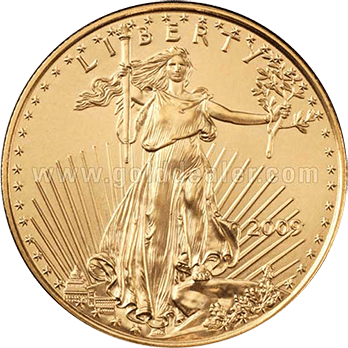
The Gold Eagle features Liberty on the front. Its reverse changed during 2021, so a random-year purchase may have an earlier or later eagle design.
The Maple Leaf features Canada’s maple leaf and a monarch portrait that depends on the issue. Modern issues can have additional authentication features. For example, the Royal Canadian Mint documents radial lines, a micro-engraved maple leaf, and Bullion DNA authentication for its 2025 coin. Do not assume every older random-year Maple Leaf has the same features.
For either series, ask about the available year and design before buying if you require a particular issue. A random-year listing offers inventory flexibility rather than a promised date.
Compare premiums and total purchase costs
The premium is the amount above the underlying gold value included in a dealer’s price. Before comparing two offers, use the same quantity, payment method, and timing, then consider shipping or other applicable charges.
Premiums can differ between coins and change with market conditions and inventory. A lower purchase premium does not guarantee a higher future return. If you later sell, the dealer’s buyback quote can differ from its retail selling price.
We have not included fixed prices here because metal-linked prices change. View current purchase prices and availability on Allegiance Gold’s 1 oz American Gold Eagle product page and 1 oz Canadian Gold Maple Leaf product page.
Which coin fits your buying preferences?
- Consider the Gold Eagle if you prefer a U.S. Mint coin, its Liberty design, and a gold alloy intended for durability.
- Consider the Maple Leaf if .9999 purity and the Canadian maple leaf design are priorities.
- Compare the actual offers if your main goal is buying a stated quantity of gold: examine the final cost, available condition, and any year or packaging requirements.
Those are product preferences, not predictions about performance. Your broader financial circumstances require separate consideration.
Common questions before buying
Is the Gold Maple Leaf worth more because it is purer?
Not automatically. The standard one-ounce versions have the same stated fine-gold content. Actual purchase and resale prices also depend on premiums, condition, inventory, and market demand.
Does the $50 face value represent the selling price?
No. Face value is the coin’s legal-tender denomination. It differs from the dealer’s bullion selling price. The Eagle’s denomination is in U.S. dollars; the Maple Leaf’s is in Canadian dollars.
Can I choose the year shown in the product image?
Only when the listing or seller confirms that year. For random-year products, ask about available dates and designs before placing an order.
Should I compare bullion coins with proof coins?
Compare like-for-like products first. A proof or graded collectible can have different pricing considerations from a standard bullion coin, even when the gold content matches.
Sources and product notes
- U.S. Mint: Bullion Coin Programs — Eagle specifications and alloy.
- Royal Canadian Mint: 2025 1 oz Gold Maple Leaf — Maple Leaf specifications and year-specific security features.
This article provides general education and product information, not personalized investment, tax, or legal advice. Precious metals carry risk; prices fluctuate, resale proceeds may be below the purchase price, and profits or future value are not guaranteed. Confirm the exact product, current pricing, availability, and applicable terms before ordering. Consult your own qualified advisors when appropriate.

 Gold Products
 Silver Products
 Platinum