Introduction: The Return of the Fort Knox Gold Audit Debate
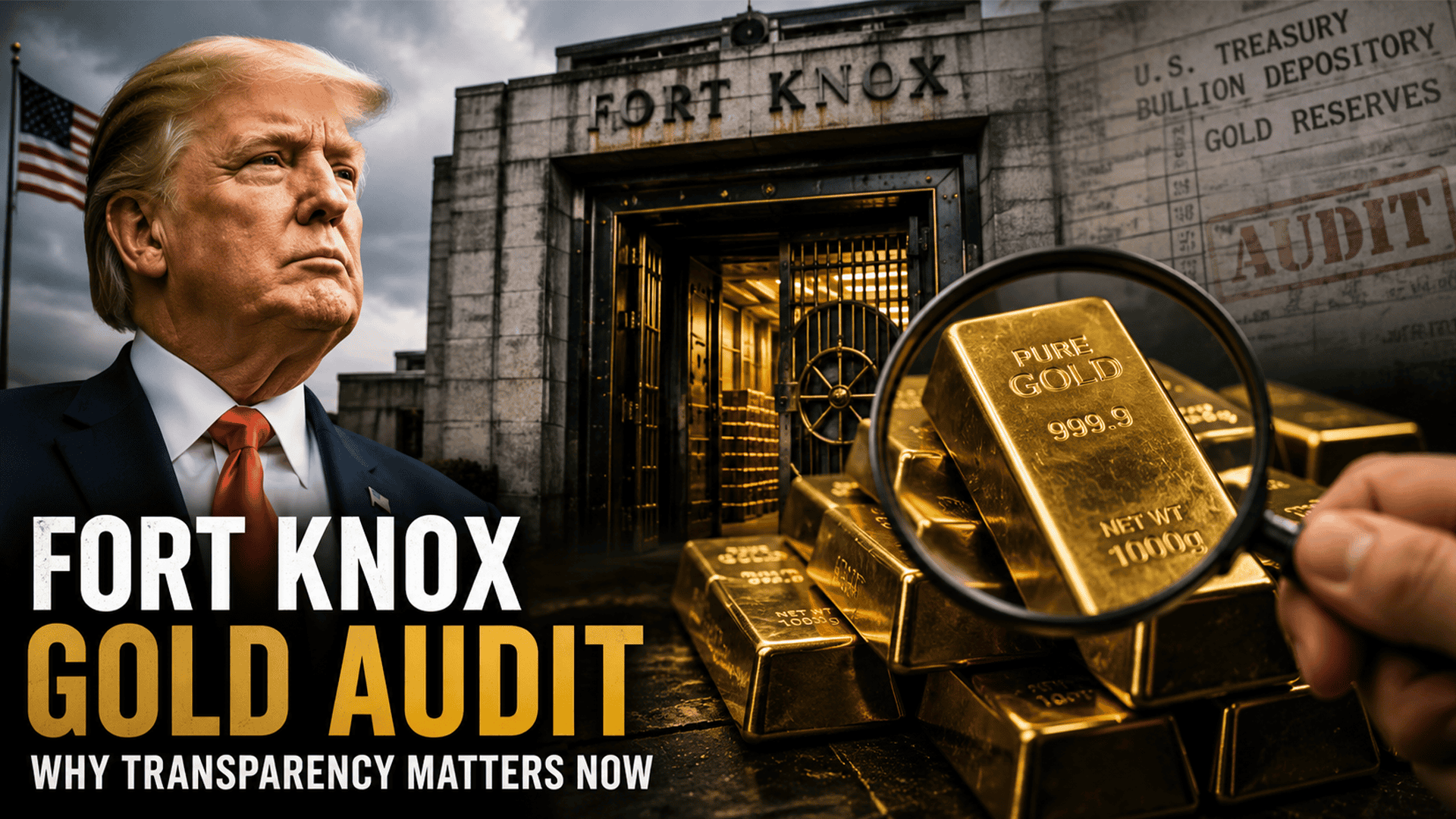
The phrase “fort knox gold audit” has re-entered public and financial discourse following renewed political calls to physically verify U.S. gold reserves stored at the Fort Knox Bullion Depository in Kentucky.
The discussion intensified after recent high-profile financial enforcement actions involving the seizure of approximately $40 million in gold bars tied to a former intelligence official. While unrelated to U.S. sovereign reserves, the event contributed to broader public interest in gold custody, transparency, and asset verification across both private and institutional channels.
Former President Donald Trump has publicly suggested a physical inspection of Fort Knox, arguing that a modern audit could reinforce confidence in the integrity of U.S. reserve assets. Treasury officials, however, continue to affirm that gold holdings are properly accounted for through established internal controls and reconciliations.
While this debate often becomes political in tone, the underlying issue for markets is fundamentally financial: how sovereign assets are verified, recorded, and trusted in modern monetary systems.
What Is Fort Knox and Why It Matters to Financial Markets
The Fort Knox Bullion Depository is one of the most secure storage facilities in the world, operated by the U.S. Department of the Treasury. It is widely believed to hold a significant portion of U.S. official gold reserves, estimated at roughly 147 million troy ounces.
At current market prices, that equates to several hundred billion dollars in market value, though on official government balance sheets, the gold is still carried at a statutory valuation of $42.22 per ounce, a legacy accounting figure that significantly understates its market worth.
This discrepancy between book value and market value is one reason Fort Knox continues to attract attention. While the U.S. no longer operates under a gold standard, gold remains a strategic reserve asset that supports confidence in sovereign balance sheets.
Importantly, Fort Knox is not a tradable financial instrument, but its perceived integrity plays a role in broader macroeconomic sentiment, particularly during periods of inflation uncertainty or geopolitical tension.
Why the Fort Knox Gold Audit Conversation Has Returned
The renewed interest in a fort knox gold audit is driven by a combination of political commentary, historical gaps in public verification, and increased scrutiny of asset custody across financial systems.
One of the central talking points is that while internal audits and reconciliations are performed by government agencies, there has been no widely publicized full physical audit of every gold bar in Fort Knox in decades.
The last major inspection occurred in the early 1950s, when select officials and congressional representatives were allowed to observe portions of the reserves. Since then, verification has largely relied on:
- Internal Treasury reconciliation processes
- Vault security and access logs
- Periodic sampling and assay checks
- Independent audits of accounting records
Supporters of a new audit argue that modern verification standards and technology could allow for greater transparency without compromising security protocols.
Opponents emphasize that existing procedures already meet stringent governmental accountability standards and that full physical audits could introduce unnecessary operational and security risks.
Has the U.S. Gold in Fort Knox Ever Been Questioned?
Over the years, various public figures and commentators have raised questions about the transparency of Fort Knox holdings, largely due to the long gap since a full public inspection.
However, there has never been credible evidence from official audits or government investigations indicating discrepancies in reported gold reserves.
The Treasury Department maintains that U.S. gold holdings are:
- Securely stored in multiple depositories
- Subject to internal controls and audit procedures
- Reconciled against detailed bar lists and records
From an institutional standpoint, sovereign gold custody operates differently from retail or exchange-traded assets. Instead of frequent full physical counts, systems rely on chain-of-custody documentation, sealed storage, and controlled verification processes.
This approach is consistent with global sovereign reserve management practices.
Market Implications of a Fort Knox Gold Audit
While Fort Knox gold is not actively traded, discussions around its verification can still influence market psychology.
1. Confidence in Sovereign Reserves
Gold remains one of the most widely recognized reserve assets globally. Any perceived uncertainty around sovereign gold reporting—however speculative—can temporarily influence sentiment in currency and commodities markets.
2. Gold Price Sensitivity
Gold prices are driven primarily by interest rates, inflation expectations, and geopolitical risk. However, symbolic events or policy discussions can create short-term sentiment shifts among traders and macro funds.
3. Broader Trust in Financial Institutions
The conversation reflects a larger theme in global markets: increasing demand for transparency in institutional balance sheets. This includes not only gold reserves but also sovereign debt reporting and central bank asset disclosures.
It is important to distinguish between verified financial reporting and political commentary, as market reactions often stem from perception rather than structural change.
What a Modern Fort Knox Gold Audit Would Involve
A full modern audit of Fort Knox would be a complex, highly controlled operation involving multiple layers of verification.
In practice, such an audit would likely include:
- Physical verification of gold bars and serial numbers
- Weight and purity confirmation through sampling
- Reconciliation with Treasury bar lists
- Independent third-party auditing oversight
- Strict chain-of-custody protocols
- Security coordination with federal agencies
Given the scale of reserves—millions of individual gold bars—such an undertaking would require extensive planning and could take significant time to complete.
Experts also note that removing or physically handling large volumes of gold increases logistical and security risks, which is why modern sovereign audits often prioritize documentation-based verification over full physical recounts.
Why the Debate Matters Beyond Politics
At its core, the fort knox gold audit discussion is not just about whether gold is physically present in a vault. It reflects a broader financial theme: the importance of trust in sovereign asset reporting systems.
In modern markets, confidence in government balance sheets plays a key role in:
- Currency stability
- Long-term inflation expectations
- Global reserve currency status
- Institutional investor sentiment
Even though gold no longer backs the U.S. dollar, it remains a symbolic anchor of financial credibility. As a result, discussions around its verification tend to attract attention well beyond the commodities sector.
Conclusion: Transparency, Trust, and the Future of Sovereign Gold Auditing
The renewed attention on a fort knox gold audit highlights a recurring tension in financial systems: the balance between operational security and public transparency.
Government agencies maintain that existing audit procedures are robust and sufficient to ensure the integrity of U.S. gold holdings. Meanwhile, political leaders and segments of the public continue to advocate for a modern physical inspection to reinforce confidence through direct verification.
Regardless of whether a full audit takes place, the discussion underscores gold’s enduring role in global finance—not just as a commodity, but as a benchmark of trust in sovereign systems.
As markets evolve and transparency expectations increase, the way governments verify and communicate reserve assets may become just as important as the assets themselves.
Disclaimer
This article is for informational and educational purposes only and should not be interpreted as investment, legal, or tax advice. All commentary is based on publicly available information and general market analysis.
To Start Your Gold IRA Today:
Download Your Free Gold IRA Guide | Open Your Gold IRA Account | Book Your Consultation
Protect your financial future with Allegiance Gold an Inc 5000 company– Your trusted partner in Gold and Silver IRA investments.
 |
 |
Buy Now |
Buy Now |
Act now and join the millions who trust gold to secure their wealth.

 Gold Products
 Silver Products
 Platinum