Bank of America Silver 309 Price: Could Silver Reach Record Highs by 2026?
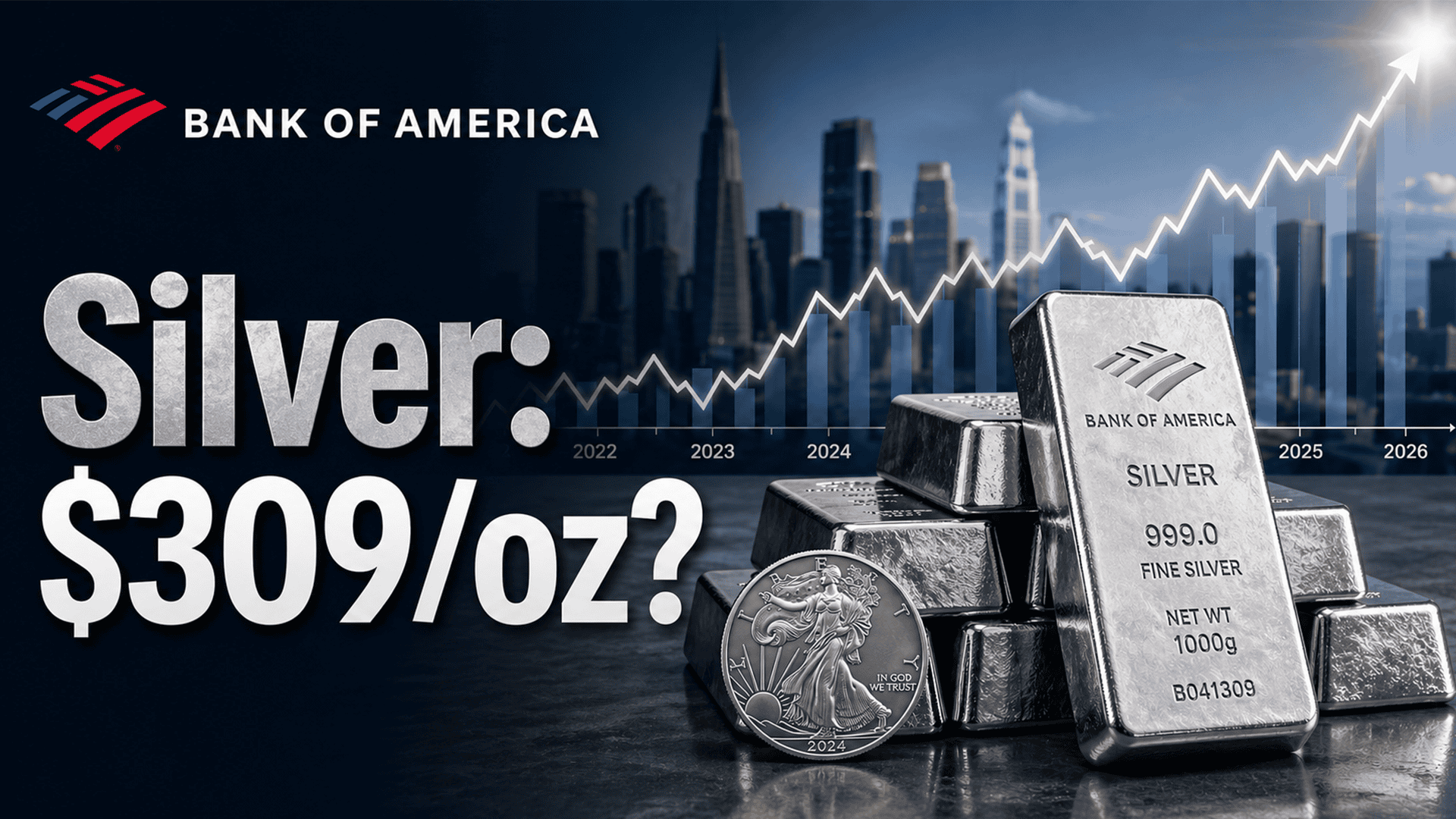
Silver is back in the spotlight. With growing interest in precious metals and renewed volatility across global markets, a bold projection has captured attention: Bank of America suggesting that silver could potentially surge to as high as $309 per ounce in the coming years.
Naturally, this has sparked a key question among investors and market watchers: Is such a move realistic—and what factors could drive it?
While no forecast is guaranteed, examining the data, market trends, and underlying fundamentals can help provide context around this ambitious outlook.
What Is Driving the “Bank of America Silver 309 Price” Projection?
Price forecasts for commodities like silver are typically based on a combination of macroeconomic conditions, supply-demand dynamics, and long-term structural trends.
In recent analyses from major financial institutions, several themes have emerged that help explain why some analysts are considering significantly higher price scenarios for silver.
Key Factors That Could Influence Silver Prices by 2026
While markets are inherently unpredictable, there are several widely discussed drivers that could play a role in shaping silver’s trajectory.
1. Industrial Demand Continues to Grow
Silver is not just a precious metal—it is also a critical industrial material.
It plays a key role in:
- Solar panels and renewable energy infrastructure
- Electric vehicles and battery technologies
- Electronics and semiconductors
As global economies continue transitioning toward cleaner energy and advanced technologies, demand for silver in industrial applications has been steadily increasing.
Some analysts suggest that this structural demand could tighten supply over time, potentially putting upward pressure on prices.
2. Supply Constraints and Mining Challenges
Unlike fiat currency, silver cannot simply be created—it must be mined.
However, silver production faces several constraints:
- Declining ore grades in existing mines
- Limited new large-scale discoveries
- Environmental and regulatory hurdles
In many cases, silver is also produced as a byproduct of mining other metals, meaning supply is not always directly responsive to price increases.
If demand rises faster than supply, this imbalance could become a significant factor in future price movements.
3. Inflation and Currency Concerns
Precious metals have historically been associated with periods of:
- Inflation
- Currency depreciation
- Economic uncertainty
While inflation levels have fluctuated in recent years, concerns about long-term currency stability and purchasing power remain part of the broader economic conversation.
In such environments, some investors look toward tangible assets like silver as part of a diversification strategy.
4. Investment Demand and Market Sentiment
Silver markets can be influenced not only by fundamentals, but also by investor behavior.
Periods of heightened interest in:
- Exchange-traded products
- Physical silver ownership
- Retail investor participation
can amplify price movements, especially given silver’s relatively smaller market size compared to gold.
In past cycles, strong inflows into silver-related investments have contributed to rapid price increases.
5. Gold-to-Silver Ratio Dynamics
Another metric often referenced by analysts is the gold-to-silver ratio, which measures how many ounces of silver are needed to purchase one ounce of gold.
Historically, when this ratio is elevated, some analysts interpret it as silver being undervalued relative to gold.
If the ratio were to normalize over time—particularly in a strong precious metals environment—silver could potentially outperform on a percentage basis.
Is a $309 Silver Price Realistic?
The idea behind the “Bank of America silver 309 price” projection represents a high-end scenario rather than a consensus expectation.
Reaching such a level would likely require a combination of factors occurring simultaneously, such as:
- Sustained global demand growth
- Significant supply shortages
- Strong investor inflows
- Broader economic or monetary instability
While these conditions are not impossible, they represent an extreme alignment of market forces.
It’s also important to note that commodity price forecasts—especially long-term ones—can vary widely and are subject to change as new data emerges.
What Happens to Silver in Volatile Markets?
Historically, silver has exhibited both:
- Safe-haven characteristics (similar to gold)
- Industrial sensitivity (tied to economic growth)
This dual nature can lead to increased volatility.
For example:
- During economic expansion, industrial demand may support prices
- During uncertainty, investment demand may increase
- In downturns, industrial demand could soften
This complexity makes silver a unique asset that does not always move in a straight line.
The Role of Silver in a Diversified Portfolio
Diversification is a commonly discussed concept in financial planning—spreading exposure across different asset types.
Some investors consider precious metals like silver as:
- A potential hedge against certain economic risks
- A way to diversify beyond traditional stocks and bonds
- A tangible asset not directly tied to corporate performance
However, silver also carries important considerations:
- Price volatility can be significant
- It does not generate income
- Market timing can be difficult
As with any asset, its role depends on individual financial goals and risk tolerance.
A Measured Perspective on Bold Forecasts
High-end projections like the “Bank of America silver 309 price” scenario can be useful for understanding what could happen under extreme conditions—but they are not predictions of certainty.
They are better viewed as:
- Scenario analysis
- Long-term possibilities
- Reflections of underlying market pressures
For investors and individuals, the focus often remains on understanding the broader landscape rather than reacting to a single forecast.
Final Thoughts
Could silver reach $309 per ounce by 2026?
It’s a possibility that would depend on a rare convergence of powerful market forces—rising demand, constrained supply, and significant economic shifts.
While such a scenario is not guaranteed, the discussion around it highlights an important reality: silver continues to play a meaningful role in both industrial growth and financial markets.
For those exploring the space, the key is not just the price target—but understanding why such projections are being discussed, and how they fit into a broader financial strategy.
Important Disclosures
This content is for informational and educational purposes only and should not be considered investment, legal, or tax advice. Past performance is not indicative of future results. All investments involve risk, including the possible loss of principal. Before making any financial decisions, consider consulting with a qualified financial professional to evaluate your individual circumstances.
To Start Your Gold IRA Today:
Download Your Free Gold IRA Guide | Open Your Gold IRA Account | Book Your Consultation
Protect your financial future with Allegiance Gold an Inc 5000 company– Your trusted partner in Gold and Silver IRA investments.
 |
 |
Buy Now |
Buy Now |
Act now and join the millions who trust gold to secure their wealth.

 Gold Products
 Silver Products
 Platinum